AVP Research Foundation | Clinical Care, Research & Ayurvedic Education
 Admissions Open! Ongoing Ayurveda Courses & Internship Training —
Explore Courses & Register Now →
Admissions Open! Ongoing Ayurveda Courses & Internship Training —
Explore Courses & Register Now →
International Journal of Ayurveda and Pharma Research
Dr. Anjana D
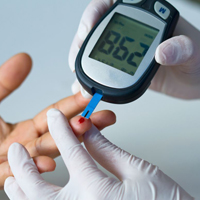
Diabetic neuropathy

Abstract
Diabetic neuropathy is one of the most common microvascular complications of diabetes mellitus. It has a significant impact in lowering quality of life (QOL) of diabetic patients. Currently, there is no effective management rather than tight blood sugar control. Hence an effective management for diabetic peripheral neuropathy (DPN) has to be deduced. A 41-year-old female patient, who was a known case of diabetes mellitus presenting with the symptoms of diabetic peripheral neuropathy was treated with a combination of Ayurvedic internal as well as external therapies, considering the treatment protocol of Prameha upadrava and Vatarakta chikitsa. The symptoms were assessed before and after treatment using the Toronto Clinical Scoring System. Significant improvement was seen in all the scores after the treatment. This case elicited that DPN can be successfully managed by Ayurvedic treatment.

Introduction
Diabetic neuropathy is defined as the presence of symptoms and/or signs of peripheral nerve dysfunction in diabetes after the exclusion of other causes (malignancy, chronic alcoholism, nutritional deficiency, infections, iatrogenic etc). The prevalence of diabetic neuropathy in Indian population ranges from 9.6% to 78%[1]. Currently there is no effective treatment available for it, except the tight control of blood glucose. While glucose management significantly reduces the risk of neuropathy developing in people with type 1 diabetes, the impact is considerably less pronounced in people with type 2 diabetes[2]. This can further lead to the progression of the disease to non-traumatic amputation. Symptoms of DPN can be found in the Poorvaroopa, Roopa and Upadrava of Prameha. If Prameha is not properly taken care of, it can lead to complications like retinopathy nephropathy and neuropathy and other major macrovascular diseases like CAD, stroke etc. Since microangiopathy is the underlying pathology, the treatment modalities of Vatarakta can also be adopted here. Chronic Prameha with uncontrolled sugar level can lead to endothelial dysfunction which can be considered as Rakta vaha srotodushti. And if Rakta dushti is associated with Kapha or Medo dushti, at first Kapha medohara treatment has to be adopted and then go on to the Kevala vata hara and Rakta prasadana chikitsa. A patient, who was a known case of diabetic peripheral neuropathy was treated using both internal as well as external therapies. This article elicits the role of Ayurvedic management in reducing the sensory and motor symptoms of diabetic peripheral neuropathy.

Case Narrative(Case Description)

Patient Perspective

Discussion

Conculusion

Acknowledgement

References
- Darivemula S, Nagoor K, Patan SK, Reddy NB, Deepthi CS, Chittooru CS. Prevalence and Its Associated Determinants of Diabetic Peripheral Neuropathy (DPN) in Individuals Having Type-2 Diabetes Mellitus in Rural South India. Indian J Community Med. 2019 Apr-Jun; 44(2): 88-91. PMID: 31333282; PMCID: PMC6625262
- Callaghan BC, Cheng HT, Stables CL, Smith AL, Feldman EL. Diabetic neuropathy: clinical manifestations and current treatments. Lancet Neurol. 2012 Jun; 11(6): 521-34. doi: 10.1016/S1474-4422(12)70065-0. Epub 2012 May 16. PMID: 22608666; PMCID: PMC4254767).
- Yang Z, Chen R, Zhang Y, Huang Y, Hong T, Sun F, Ji L, Zhan S. Scoring systems to screen for diabetic peripheral neuropathy. Cochrane Database Syst Rev. 2018 Jul 30; 2018(7): CD010974. doi: 10.1002/14651858.CD010974.pub2. PMCID: PMC6513667.
- Ashtanga Hridayam- Nidanasthanam; Vagbhata, Translated into English by Dr. K. R. Srikantha Murthy; Chaukamba Oriental Publisher & Distributor, Varanasi; Krishnadas Academy; 1992; Vlo -II; Chapter – 10; Page No.- 92-99; Prameha - Sankya, Nidana, Rupas, Samanya Lakshanas, Upadravas etc
- Vrddha Vagbhatta. Ashtang Hridaya. with Shashilekha Sanskrit Commentary by Indu. Edited by Kaviraj Atridev Gupta. Varanasi: Chaukambha Publication, Vol.-1 Reprint 2012.

Dr. Anjana D
BAMS , MD (Ayu)
AVP Research & Foundation

Category:
Journal

Condition:
Diabetic neuropathy

Treatment:
Shodhana (purification) of Shilajit

Duration:

OutCome: