 Admissions Open! Ongoing Ayurveda Courses & Internship Training —

AVP Research Foundation | Clinical Care, Research & Ayurvedic Education
Ayurvedic Eye Care: Netra Tarpana and Aschyotana Explained
Article
Read the Full Story
Ayurvedic Eye Care: Netra Tarpana and Aschyotana Explained
Ayurveda describes several traditional approaches to eye care under the broader concept of Netra Chikitsa.
Among the procedures discussed in Ayurvedic practice are Netra Tarpana and Aschyotana. Because the eye is a delicate organ, these procedures should not be treated as ordinary home remedies.
What Is Netra Tarpana?
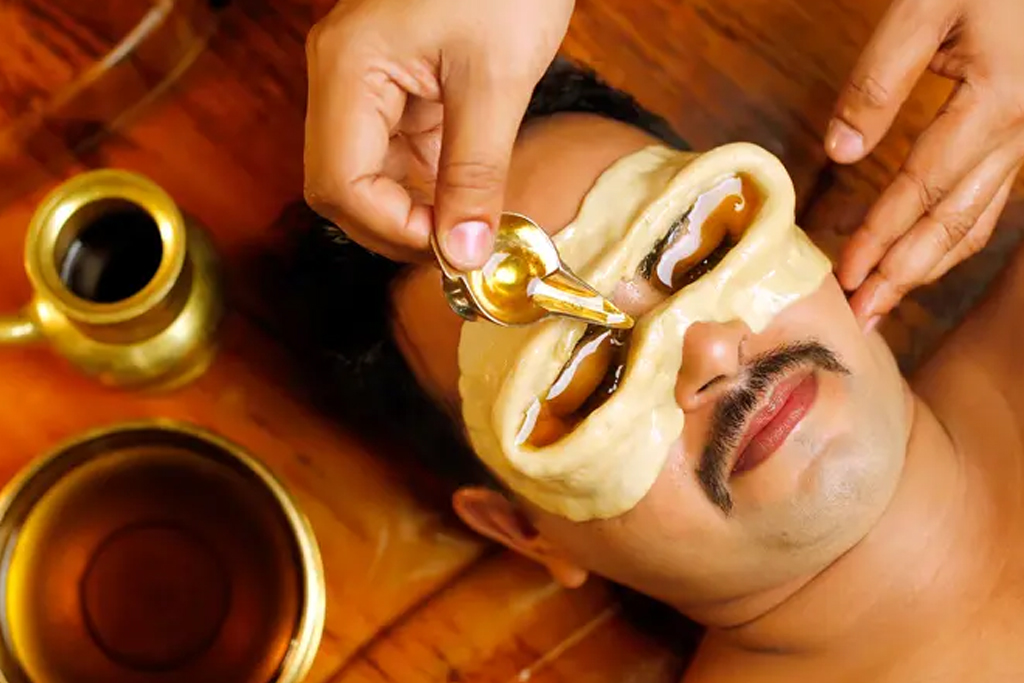
Netra Tarpana is a specialised Ayurvedic eye-care procedure described in traditional practice.
The procedure involves creating a controlled area around the eyes and using a prescribed preparation according to the practitioner's assessment and the individual's needs.
The exact approach, preparation and suitability should be determined by a qualified practitioner.
What Is Aschyotana?
Aschyotana is another traditional Ayurvedic eye procedure involving the application of an appropriately prepared formulation to the eye.
Because anything placed directly into the eye needs to be handled carefully, Aschyotana should be performed only with suitable preparations and under professional supervision.
Why Professional Guidance Matters
The eyes are sensitive organs, and not every eye complaint has the same cause.
Symptoms such as redness, pain, discharge, blurred vision or irritation can occur for different reasons. Some conditions require prompt ophthalmic evaluation.
Therefore, self-treatment should be avoided.
Avoid Homemade Eye Remedies
Do not put homemade oils, ghee, herbal juices or other unsterile substances into the eyes.
A preparation being described as "natural" does not automatically make it safe for direct application to the eye.
If you are interested in Ayurvedic eye therapies, consult a qualified practitioner and disclose any existing eye conditions, medications, contact-lens use or previous eye procedures.
Ayurveda and Contemporary Eye Care
Ayurvedic therapies should not be used to delay necessary eye examinations or treatments.
Many eye diseases can develop with few noticeable symptoms, making professional eye examinations an important part of eye health.
When to Seek Immediate Eye Care
Seek prompt medical attention for symptoms such as:
- Sudden loss of vision
- Severe eye pain
- New flashes of light
- A sudden increase in floaters
- A painful red eye
- Significant or persistent blurred vision
- Chemical exposure
- Eye injury
These symptoms should not be managed solely with home remedies.
Conclusion
Netra Tarpana and Aschyotana are traditional Ayurvedic procedures associated with eye care. They should be approached carefully, based on individual assessment and under qualified professional supervision.
For safe eye care, traditional approaches should be combined with appropriate modern eye evaluation whenever required.
FAQs
Frequently Asked Questions
Netra Tarpana is a specialised Ayurvedic eye-care procedure described in traditional Ayurvedic practice.
Aschyotana is a traditional Ayurvedic procedure involving the application of an appropriate preparation to the eye.
It is not advisable to perform specialised eye procedures without professional assessment and guidance.
No. Homemade or unsterile substances should not be placed directly into the eyes.
No. Eye therapies should not replace appropriate examination, diagnosis or treatment when these are required.
Keep Reading
Related Articles


Need Personalised Ayurvedic Guidance?
Speak with our specialists and receive a treatment plan tailored to your health needs.
Book an Appointment