 Advance Your Clinical Skills with Marma Therapy! Admissions Open at AVP Research Foundation. Enrol Today!

AVP Research Foundation | Clinical Care, Research & Ayurvedic Education

Ayurveda and Modern Research: Connecting Traditional Knowledge with Science
Discover how modern scientific research, clinical trials and evidence-based practices are helping evaluate traditional Ayurvedic knowledge for modern healthcare.
Article
Read the Full Story
Introduction
Ayurveda is one of India's oldest traditional systems of healthcare, with a rich history of knowledge related to health, nutrition, medicinal plants and lifestyle practices. For generations, Ayurvedic principles have guided approaches to maintaining well-being and understanding the relationship between the human body, mind and environment.
Today, healthcare is evolving through scientific discoveries, advanced diagnostic technologies and clinical research. This creates an important opportunity to study traditional Ayurvedic knowledge using modern scientific methods.
The connection between Ayurveda and modern research is not simply about preserving ancient practices. It is about understanding their potential applications, evaluating their safety and effectiveness, and identifying areas where further scientific investigation is necessary.
In 2026, evidence-based research is becoming increasingly important in the responsible development of Ayurveda and its role in modern healthcare.
1. Understanding the Relationship Between Ayurveda and Science
Ayurveda is based on traditional concepts such as Tridosha, Prakriti, Agni, Dhatu and Srotas. These concepts provide a framework for understanding health, individual constitution and disease according to Ayurvedic philosophy.
Modern biomedical science approaches health through measurable biological processes, laboratory investigations, clinical observations and controlled experiments.
Although these approaches have different foundations, research can create opportunities to investigate specific Ayurvedic practices and interventions using appropriate scientific methods.
For example:
-
Medicinal plants can be studied through phytochemical and pharmacological investigations.
-
Ayurvedic formulations can undergo quality testing and safety evaluation.
-
Traditional therapies can be assessed through appropriately designed clinical studies.
-
Lifestyle recommendations can be evaluated using measurable health and well-being outcomes.
Scientific investigation helps distinguish traditional descriptions, promising research findings and clinically established evidence.
2. The Importance of Scientific Research in Ayurveda
Scientific research plays an essential role in understanding the potential benefits and limitations of Ayurvedic interventions.
Traditional knowledge provides valuable starting points for research, but historical use alone does not establish that a treatment is safe or effective for a particular medical condition.
Research can help answer important questions:
-
What are the active chemical constituents of a medicinal plant?
-
How consistent is the quality of an Ayurvedic formulation?
-
What are its potential biological effects?
-
What dosage and treatment duration have been evaluated?
-
Are there possible side effects or interactions with other medicines?
-
Does the intervention produce measurable benefits in properly conducted clinical studies?
The Central Council for Research in Ayurvedic Sciences (CCRAS), under the Ministry of AYUSH, undertakes research in areas including clinical evaluation, drug standardization, pharmacological research, medicinal plants and public health.
These activities contribute to building a stronger scientific understanding of Ayurveda.
3. Medicinal Plants and Modern Pharmacological Research
Medicinal plants are an important part of Ayurvedic healthcare traditions.
Plants such as Ashwagandha, Turmeric, Neem, Amla and Tulsi have been used in different traditional preparations and healthcare practices.
Modern research investigates medicinal plants through several scientific approaches:
Phytochemical analysis: Identifying and studying naturally occurring chemical compounds present in plants.
Pharmacological studies: Investigating how plant extracts or specific compounds interact with biological systems, initially through laboratory and preclinical studies.
Toxicological evaluation: Examining potential harmful effects and identifying safety concerns.
Clinical research: Studying whether a specific preparation provides measurable benefits in human participants.
It is important to understand that laboratory findings do not automatically establish clinical effectiveness. A compound showing biological activity in a laboratory may not produce the same effect in humans.
Therefore, further clinical investigation is necessary before making healthcare recommendations.
4. Clinical Trials: Evaluating Ayurvedic Treatments
Clinical trials are important for determining whether a particular healthcare intervention is safe and effective.
In Ayurveda, clinical research may investigate herbal formulations, dietary interventions, therapeutic procedures and individualized treatment approaches.
Some commonly used research methods include:
Observational studies: Researchers examine health outcomes among participants without assigning a specific intervention.
Randomized controlled trials (RCTs): Participants are assigned to different treatment groups using randomization to evaluate outcomes while reducing certain forms of bias.
Comparative studies: Different interventions are evaluated to understand their relative effects.
Systematic reviews and meta-analyses: Researchers assess and, where appropriate, combine findings from multiple studies to understand the overall evidence.
Ayurvedic research may also require careful consideration of individual constitution, treatment protocols and combined lifestyle interventions.
For reliable results, studies should include appropriate sample sizes, clearly defined outcomes, ethical approval, transparent reporting and adequate safety monitoring.
5. Quality Control and Safety of Ayurvedic Medicines
The safety and quality of medicines are essential aspects of responsible healthcare.
Ayurvedic formulations may contain herbal, mineral or other ingredients. Their quality can vary depending on raw materials, preparation methods, manufacturing processes and storage conditions.
Modern quality-control practices can help evaluate:
-
Botanical identification and authentication.
-
Purity and composition of raw materials.
-
Active and marker compound concentrations where relevant.
-
Microbial contamination.
-
Pesticide residues.
-
Heavy metal contamination.
-
Batch-to-batch consistency.
-
Stability and appropriate storage conditions.
Some Ayurvedic preparations have been found to contain potentially harmful amounts of lead, mercury or arsenic. Therefore, appropriate testing, manufacturing standards and professional supervision are important.
Patients should use Ayurvedic medicines only with suitable professional guidance and inform their healthcare providers about all medicines and supplements they take.
6. Integrating Traditional Knowledge with Modern Healthcare
The integration of Ayurveda with modern healthcare requires scientific evidence, professional collaboration and a strong focus on patient safety.
Traditional knowledge can provide research questions and potential areas for investigation, while modern scientific methods can help evaluate specific interventions.
Potential areas of collaboration include:
-
Preventive healthcare and healthy lifestyle education.
-
Research on medicinal plants and natural products.
-
Nutrition and dietary research.
-
Clinical evaluation of traditional therapies.
-
Studies on healthy ageing and quality of life.
-
Research into safety and interactions between medicines.
-
Development of standardized treatment protocols.
Integration should not mean replacing established medical treatments with unverified traditional remedies. Instead, any complementary intervention should be assessed according to the available evidence and the individual patient's healthcare needs.
7. The Role of Technology in Modern Ayurvedic Research
Technology is creating new opportunities to document, analyse and study traditional healthcare knowledge.
Some emerging research areas include:
Bioinformatics: Computational methods that help researchers analyse biological information and identify patterns.
Artificial intelligence: Potential applications include organizing research literature, analysing complex datasets and supporting research discovery. AI-generated findings still require independent scientific validation.
Advanced laboratory techniques: Modern analytical technologies can help identify chemical constituents and evaluate the quality of herbal preparations.
Digital health records: Structured clinical records can support research documentation, follow-up and analysis of patient outcomes, subject to privacy and ethical requirements.
Clinical research databases: Digital platforms can improve access to registered studies, published research and scientific findings.
These technologies may strengthen the research process, but they cannot replace well-designed clinical studies or professional medical judgment.
8. The Future of Evidence-Based Ayurveda
The World Health Organization's Global Traditional Medicine Strategy 2025–2034 emphasizes strengthening scientific evidence, improving safety and regulation, and supporting the responsible integration of traditional, complementary and integrative medicine into healthcare systems.
This direction provides important opportunities for Ayurvedic educational institutions, research organizations and healthcare professionals.
Future research priorities should include:
-
Conducting larger and well-designed clinical trials.
-
Standardizing Ayurvedic medicines and treatment protocols.
-
Improving safety monitoring and pharmacovigilance.
-
Encouraging interdisciplinary collaboration.
-
Publishing research transparently.
-
Evaluating long-term outcomes.
-
Supporting ethical and patient-centred research.
Building a reliable evidence base requires both respect for traditional knowledge and a willingness to evaluate its claims critically.
Conclusion: Advancing Ayurveda Through Research and Innovation
Ayurveda and modern science offer different approaches to understanding health, but responsible scientific research creates opportunities to investigate their areas of connection.
From medicinal plant research and formulation standardization to clinical trials and digital healthcare technologies, scientific investigation can help clarify the potential applications and limitations of Ayurvedic practices.
The future of Ayurveda depends on preserving traditional knowledge while strengthening research quality, patient safety and evidence-based clinical practice.
At AVP Research Foundation (AVPRF), we believe that research, education and responsible healthcare innovation are essential for advancing the understanding of Ayurveda and exploring its relevance in modern healthcare.
By connecting traditional knowledge with scientific investigation, we can contribute to a more informed, responsible and evidence-based future for Ayurveda.
Disclaimer: This article is intended for educational and informational purposes only. It does not constitute medical advice or recommend any specific treatment. Consult a qualified healthcare professional before starting, changing or discontinuing any medication or therapy.
References
References
- World Health Organization. Global Traditional Medicine Strategy 2025–2034. Geneva: WHO, 2025.
- Central Council for Research in Ayurvedic Sciences (CCRAS). Clinical Research. Ministry of AYUSH, Government of India.
- National Center for Complementary and Integrative Health (NCCIH). Ayurvedic Medicine: In Depth.
- Ministry of AYUSH, Government of India. AYUSH Research Portal – Evidence-Based Research Data.
- World Health Organization. Traditional Medicine and Complementary Medicine: Research, Safety and Evidence-Based Integration.
Keep Reading
Related Articles

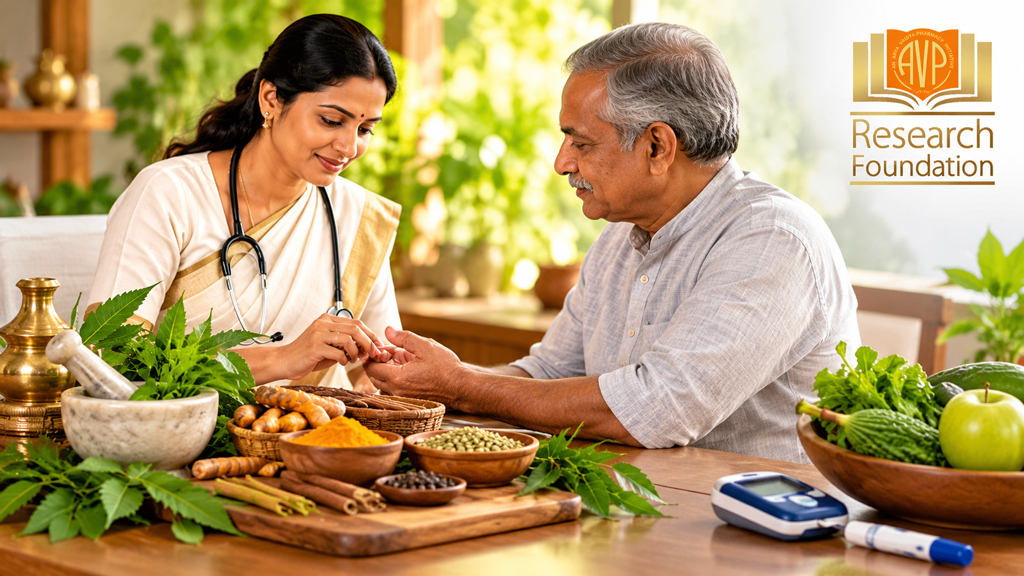
Need Personalised Ayurvedic Guidance?
Speak with our specialists and receive a treatment plan tailored to your health needs.
Book an Appointment