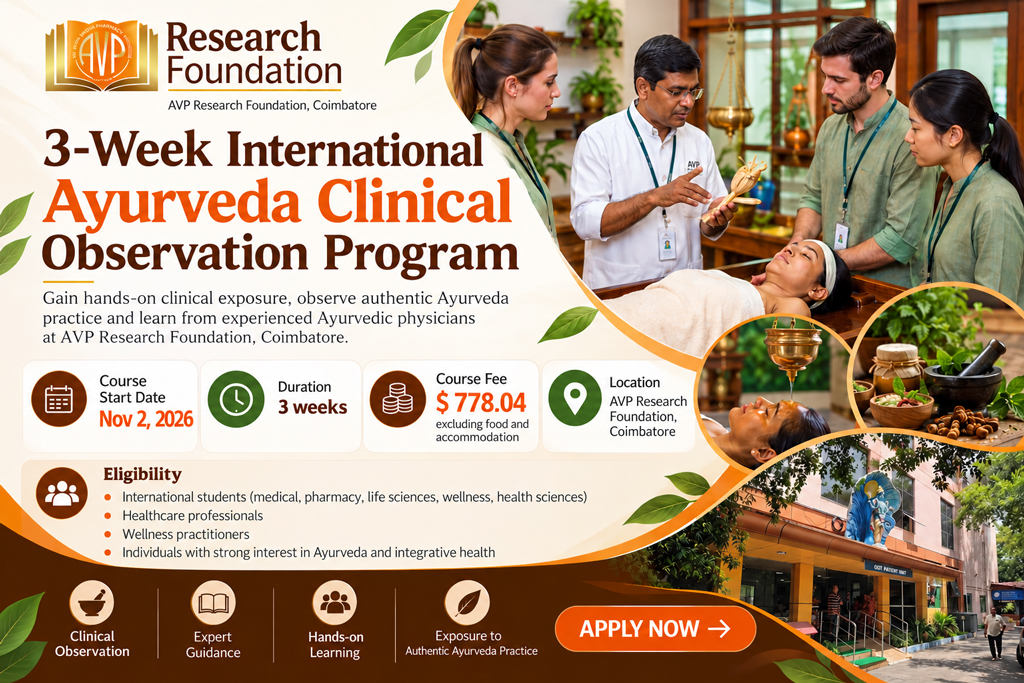
 Admissions Open! Ongoing Ayurveda Courses & Internship Training —

AVP Research Foundation | Clinical Care, Research & Ayurvedic Education

What Does Ayurveda Say About Healthy Eyes?
Article
Read the Full Story
What Does Ayurveda Say About Healthy Eyes?
Ayurveda takes a holistic view of health, giving importance to food, lifestyle, daily routines and personalised care. The eyes are considered an important sense organ, and traditional Ayurvedic literature describes various approaches to supporting eye health.
The Ayurvedic approach to eye care is commonly referred to as Netra Chikitsa.
The Ayurvedic View of Eye Health
Rather than focusing only on an individual symptom, Ayurveda traditionally considers the person's overall health, lifestyle, diet and individual constitution.
This approach may include:
- Balanced nutrition
- Appropriate daily routines
- Adequate rest
- Healthy lifestyle practices
- Personalised assessment
- Selected traditional therapies when appropriate
The goal is to encourage healthy habits while addressing individual needs.
What Is Netra Chikitsa?
Netra Chikitsa is the Ayurvedic approach to eye care. Traditional Ayurvedic texts describe several procedures associated with eye care.
Two commonly discussed procedures are:
Netra Tarpana
Netra Tarpana is a specialised Ayurvedic procedure traditionally performed around the eyes using appropriately prepared materials. It should be carried out only by a trained practitioner after assessing whether it is appropriate for the individual.
Aschyotana
Aschyotana refers to a traditional Ayurvedic eye procedure involving the application of prescribed preparations to the eye. Because the eye is highly sensitive, such procedures should not be attempted without professional guidance.
Why Personalised Care Matters
Not every eye concern is the same. Eye discomfort can have many different causes, and some conditions may require examination and medical treatment.
For this reason, an appropriate assessment should come before choosing any therapy.
Ayurveda Alongside Modern Eye Care
Ayurvedic approaches can be explored as part of an integrated approach where appropriate. However, they should not delay necessary ophthalmic evaluation.
Regular eye examinations are important because some eye conditions can have few or no noticeable symptoms in their early stages.
A Practical Approach to Eye Health
You can support your overall eye health by:
- Eating a balanced diet
- Getting adequate sleep
- Taking breaks during prolonged screen use
- Protecting your eyes from injury and excessive UV exposure
- Maintaining good hand and eye hygiene
- Managing conditions such as diabetes and high blood pressure with your healthcare team
- Having eye examinations according to your individual risk
Diabetes, for example, increases the risk of diabetic eye disease, and regular eye examinations are particularly important for people living with diabetes.
Conclusion
Ayurveda views eye health as part of overall wellbeing. Through balanced living, appropriate nutrition, personalised care and professionally guided traditional practices, Ayurveda offers a holistic perspective on eye care.
At the same time, modern eye examinations remain essential for identifying and managing eye conditions.
FAQs
Frequently Asked Questions
Ayurveda emphasises balanced living, appropriate diet, rest, prevention and personalised care as part of maintaining healthy eyes.
Netra Chikitsa is the Ayurvedic approach to eye care and includes traditional lifestyle, dietary and therapeutic practices.
No. Suitability depends on the individual's condition and should be assessed by a qualified practitioner.
Depending on the condition, Ayurvedic care may be considered alongside appropriate modern eye evaluation and treatment.
Some eye diseases may not cause noticeable symptoms initially, so examinations can help detect problems earlier.
Keep Reading
Related Articles


Need Personalised Ayurvedic Guidance?
Speak with our specialists and receive a treatment plan tailored to your health needs.
Book an Appointment