 Admissions Open! Ongoing Ayurveda Courses & Internship Training —
Explore Courses & Register Now →


AVP Research Foundation | Clinical Care, Research & Ayurvedic Education
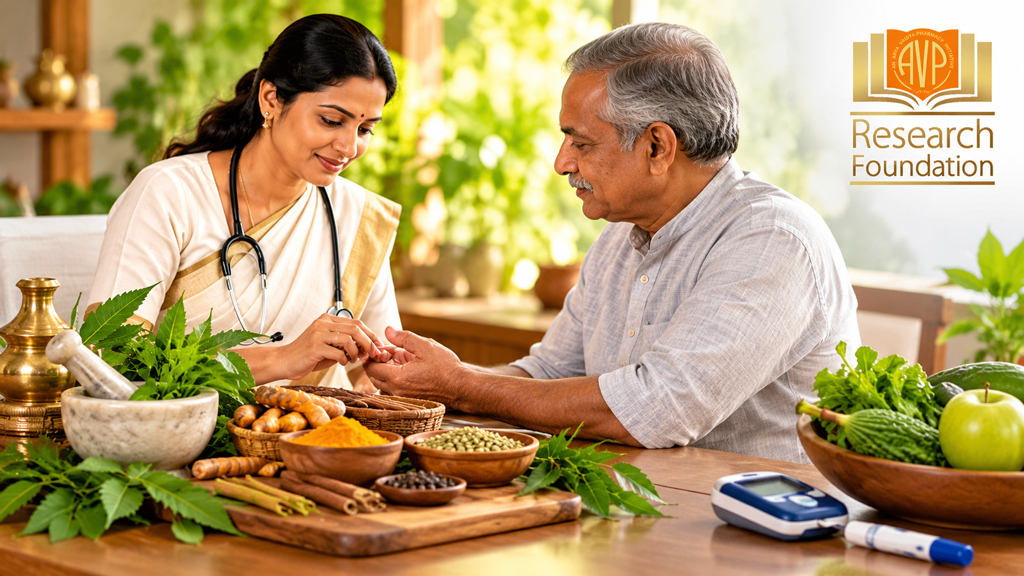
Prameha in Ayurveda (Understanding Type 2 Diabetes)
Prameha is an important disease concept described in classical Ayurvedic literature and is traditionally associated with excessive and abnormal urination. Its clinical features share similarities with several metabolic and urinary disorders, including Type 2 Diabetes Mellitus.
Article
Read the Full Story
Prameha in Ayurveda: Understanding Type 2 Diabetes Through Traditional Knowledge and Modern Research
Introduction
Prameha is an important disease concept described in classical Ayurvedic literature and is traditionally associated with excessive and abnormal urination. Its clinical features share similarities with several metabolic and urinary disorders, including Type 2 Diabetes Mellitus.
Ayurveda describes 20 types of Prameha based on the predominance of the three Doshas: Kapha, Pitta, and Vata. The condition is understood as a complex metabolic disorder influenced by dietary habits, lifestyle, digestive function, and individual constitution.
In the early stages, Kapha predominance is commonly associated with factors such as excessive consumption of heavy, oily, and sweet foods, reduced physical activity, and metabolic disturbances. As the condition progresses, Pitta and Vata involvement may also occur.
Modern medicine identifies Type 2 Diabetes Mellitus as a chronic metabolic disease characterized by insulin resistance and impaired glucose regulation. Exploring the relationship between Prameha and diabetes provides opportunities for integrative research and a better understanding of metabolic health.
1. Research Studies on Prameha
Ayurvedic research explores the relationship between Prameha and modern metabolic conditions, particularly Type 2 Diabetes Mellitus.
Research areas include:
-
Etiological factors: Studies examine dietary habits, sedentary lifestyles, excessive consumption of sweet and heavy foods, and other factors described in Ayurvedic literature.
-
Herbal formulations: Clinical and experimental studies investigate the potential metabolic effects of traditional herbal preparations.
-
Shodhana therapies: Researchers explore classical purification approaches and their possible role in managing metabolic disorders.
-
Dietary interventions: Traditional dietary recommendations, including Yava (barley), are highlighted in classical Prameha Chikitsa.
-
Traditional medicinal plants: Methika (fenugreek) has a long history of traditional use in metabolic health management.
-
Preventive approaches: Lifestyle modifications, physical activity, and appropriate dietary practices are important areas of investigation.
Classical Ayurvedic literature identifies several dietary and lifestyle factors associated with Prameha, including excessive consumption of sweet foods, jaggery preparations, and other Kapha-aggravating substances.
Modern research also recognizes the multifactorial nature of Type 2 Diabetes Mellitus, involving genetic, dietary, metabolic, and lifestyle-related factors.
2. Publications and Classical References
Ayurvedic publications provide valuable insights into the traditional understanding, classification, causes, symptoms, and management of Prameha.
Important areas covered in the literature include:
-
Classical descriptions of the twenty types of Prameha.
-
Ayurvedic explanations of disease causation and progression.
-
Traditional herbal formulations used in Prameha management.
-
Dietary recommendations and preventive strategies.
-
The role of lifestyle modifications in metabolic health.
-
Contemporary research exploring the relationship between Prameha and Type 2 Diabetes Mellitus.
These publications provide a foundation for understanding traditional Ayurvedic concepts and identifying areas for further scientific investigation.
3. Clinical Outcomes
Clinical studies investigating Ayurvedic approaches to metabolic health have explored the effects of dietary modifications, lifestyle interventions, herbal preparations, and classical treatment protocols.
Some research areas include:
-
Changes in Body Mass Index (BMI).
-
Improvements in blood glucose measurements.
-
Changes in fasting and postprandial blood glucose levels.
-
Assessment of symptoms such as excessive thirst, frequent urination, and generalized weakness.
-
Evaluation of metabolic health indicators.
-
Assessment of diabetes-associated complications and quality of life.
Classical Ayurvedic approaches emphasize individualized treatment based on Dosha involvement, disease stage, digestive capacity, and patient constitution.
However, clinical outcomes vary between individuals and studies. Further well-designed clinical trials are required to establish the safety and effectiveness of specific Ayurvedic interventions.
4. Experts and Research Institutions
Prameha is an important area of study within Ayurvedic clinical practice and metabolic health research.
Several Ayurvedic research organizations, academic institutions, specialized healthcare centres, and experienced physicians contribute to this field through:
-
Clinical research and observational studies.
-
Investigation of traditional herbal formulations.
-
Research into dietary and lifestyle interventions.
-
Evaluation of Shodhana and other classical treatment approaches.
-
Education and training in Ayurvedic approaches to metabolic health.
Collaborative research between Ayurveda and modern medical institutions can contribute to a better understanding of metabolic disorders.
5. Courses and Educational Opportunities
Students and healthcare professionals interested in Ayurvedic approaches to diabetes and metabolic health may explore relevant educational programmes, including:
-
Executive Diploma in Ayurvedic Diabetology.
-
Certificate Course in Diabetic Care and Diet through Ayurveda.
-
Panchagavya and Traditional Diabetes Management Courses.
-
Bachelor of Ayurvedic Medicine and Surgery (BAMS).
Course availability, eligibility, and recognition should be verified with the respective educational institutions.
6. Understanding Prameha: Ayurvedic Concepts
Section 1: Definition and Overview
Prameha is described in Ayurveda as a group of disorders characterized by excessive and abnormal urination, including changes in the colour, consistency, and other characteristics of urine.
Classical texts provide detailed descriptions of its causes, symptoms, disease progression, and management.
A quick understanding of Prameha includes:
-
Abnormal urinary patterns.
-
Excessive urination.
-
Metabolic disturbances.
-
Association with dietary and lifestyle factors.
-
Potential progression into more complex health conditions.
Section 2: Classification and Causes
Ayurveda classifies Prameha into twenty types according to Dosha predominance:
-
Kaphaja Prameha.
-
Pittaja Prameha.
-
Vataja Prameha.
Kaphaja Prameha is traditionally considered more manageable, particularly in its early stages, while Vataja Prameha is generally associated with a more difficult prognosis.
Important causative factors described in Ayurveda include:
-
Excessive consumption of dairy products and heavy foods.
-
Frequent intake of sweet and fatty foods.
-
Sedentary lifestyle.
-
Lack of regular physical activity.
-
Unhealthy dietary habits.
Management is traditionally individualized according to the aggravated Dosha, disease stage, and patient's overall condition.
Section 3: Ayurvedic Management and Disease Understanding
Ayurveda approaches Prameha as a systemic metabolic imbalance rather than focusing exclusively on elevated blood glucose.
Classical descriptions categorize Prameha according to prognosis into:
-
Sadhya: Conditions considered manageable or treatable.
-
Yapya: Conditions requiring continuous management.
-
Asadhya: Conditions considered difficult to manage according to classical Ayurvedic principles.
Traditional management approaches include dietary regulation, physical activity, lifestyle modifications, and individualized herbal interventions.
Bitter medicinal plants such as Neem and Haridra (Turmeric) are discussed in traditional Ayurvedic literature in relation to metabolic health.
The ultimate objective is to support metabolic balance and improve overall health through appropriate, individualized interventions.
7. Categories of Prameha
Prameha is an important disease concept in Ayurvedic medicine, traditionally associated with disturbances in urinary function and metabolism.
It includes several conditions classified according to their Dosha involvement and clinical characteristics.
Acquired forms of Prameha are associated in classical literature with improper dietary habits, excessive consumption of Kapha-aggravating foods, and reduced physical activity.
Although Prameha is frequently compared with diabetes mellitus, the two concepts are not completely interchangeable. Prameha encompasses a broader traditional disease classification.
Keep Reading
Related Articles

Need Personalised Ayurvedic Guidance?
Speak with our specialists and receive a treatment plan tailored to your health needs.
Book an Appointment